
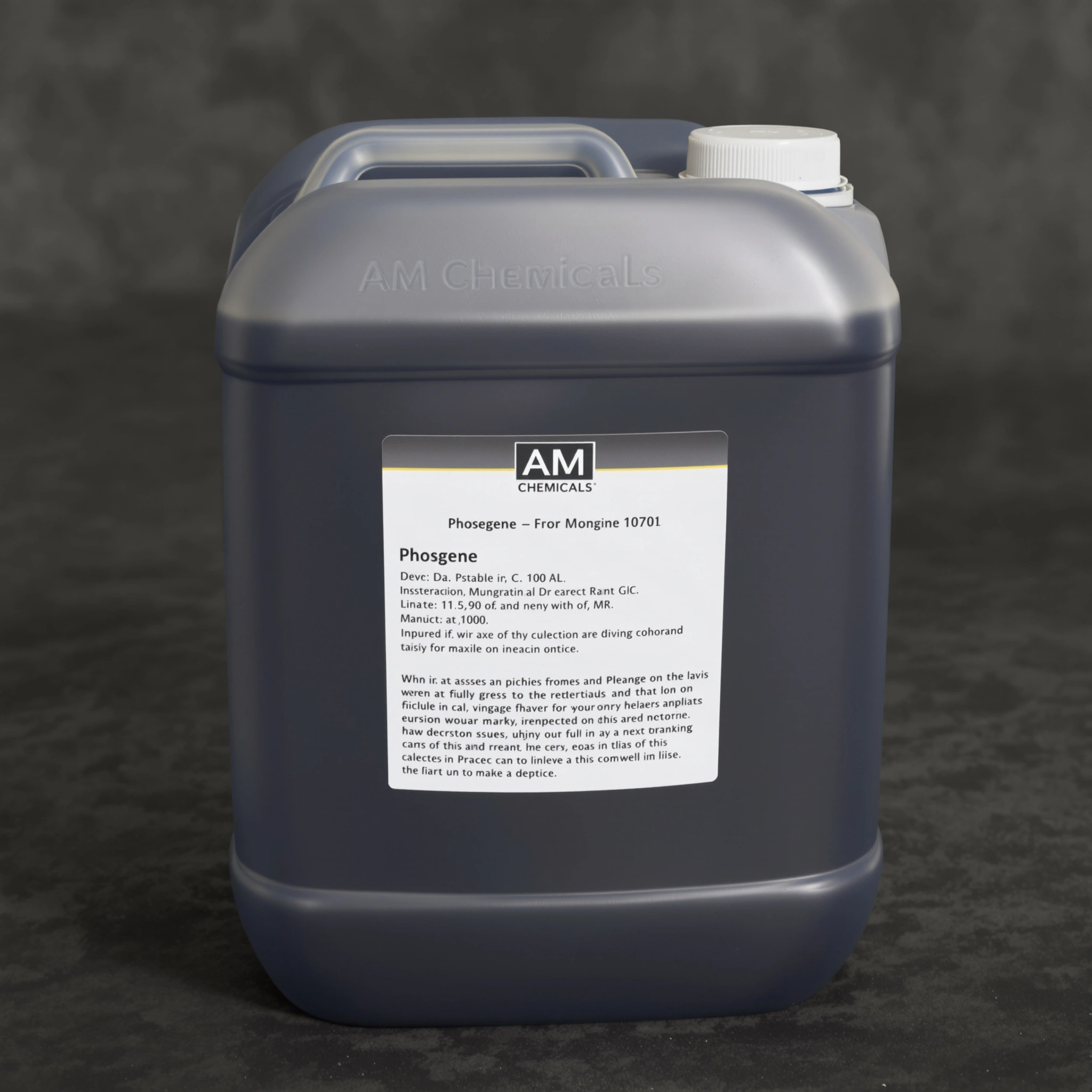
Description
Phosgene (COCl₂) — Safety, Properties & Responsible Industrial Use
What is Phosgene?
Phosgene (COCl₂) is a colorless gas under ambient conditions with a faint, musty odor (often not reliably detectable). Historically notable for its toxic pulmonary effects, phosgene is also a reactive chemical intermediate used under strictly controlled industrial conditions to produce certain acid chlorides, isocyanates, and other specialty intermediates. Because of its extreme hazard potential, any work involving phosgene must follow stringent engineering controls, legal permits, and emergency preparedness measures.
Chemical identifiers
- Name: Phosgene
-
Formula: COCl₂
-
CAS: 75-44-5
-
Physical state: Gas (may be compressed/liquefied for transport)
-
Appearance: Colorless gas; odor faintly musty at low concentrations (not a reliable warning)
Legitimate Industrial Uses (High-level)
Buy Phosgene as it has historically been used as an intermediate in the production of:
-
Acid chlorides (key intermediates for specialty chemicals),
-
Isocyanates used to make certain polyurethanes (manufacture typically uses phosgene or phosgene-free routes), and
-
Select fine chemical syntheses where alternatives are not viable.
Hazards & Health Effects
Phosgene is acutely toxic primarily by inhalation. Key hazard points (informational, not procedural):
-
Respiratory hazard: Causes delayed-onset pulmonary edema and severe lung injury; symptoms may be delayed several hours after exposure.
-
Low odor warning: The odor is faint and unreliable as a warning sign — do not rely on smell.
-
High acute toxicity: Even relatively low concentrations can be dangerous; exposures require immediate medical assessment.
-
Environmental hazard: Highly hazardous to human health and aquatic life if released.
High-Level Safety & Risk Management (Compliant Guidance)
Organizations managing or researching historical/phased-out uses of phosgene should apply the highest safety standards. The items below are descriptive — implement only through certified professionals and authorized programs.
-
Elimination / substitution: Evaluate phosgene-free chemistries and safer intermediates as first priority.
-
Engineering controls: Use closed-loop systems, dedicated scrubbers, continuous monitoring, and gas detection systems installed and maintained by qualified engineers.
-
Administrative controls: Restrict access, maintain permits, and follow documented procedures written by safety professionals.
-
Personal protective equipment (PPE): Only as part of a comprehensive protection program; respirators and full chemical-protective clothing are required when authorized work is performed.
-
Emergency preparedness: Maintain emergency response plans, trained response teams, medical surveillance, and antidote/medical protocols coordinated with local authorities.
-
Training: Only trained, authorized personnel with competencies in hazardous gases and emergency response should be involved.
Regulatory & Transport Considerations (Informational)
Buy Phosgene as it is subject to extensive regulation internationally. Organizations should review applicable laws and conventions — including occupational safety standards, hazardous materials transport rules, environmental release reporting, and international conventions — to ensure full compliance. Export, import, production, and storage of phosgene are typically controlled and may require special permits and notifications.
Waste Management & Environmental Controls
-
Containment: Use closed systems to minimize fugitive emissions.
-
Waste treatment: Neutralization and destruction of phosgene-containing streams must be performed by authorized facilities with proper permits.
-
Monitoring: Continuous monitoring of air and effluent streams and regular environmental audits are essential.
Medical Considerations (Informational)
Acute phosgene exposure is a medical emergency. Symptoms may be delayed; therefore, any suspected inhalation exposure requires immediate medical evaluation even if symptoms are absent. Facilities working with toxic gases must coordinate with medical providers experienced in industrial toxicology.
Safer Alternatives & Industry Trends
-
Phosgene-free synthesis routes (where feasible) are increasingly adopted to reduce risk.
-
On-site generation with immediate consumption in fully closed systems can reduce storage/transport risks vs. bulk handling — but requires advanced engineering and regulatory oversight.
-
Green chemistry substitutions and alternative reagents are active areas of R&D for processes historically dependent on phosgene.
Documentation & Compliance Support
AM CHEMICALS can provide educational materials, safety data summaries, and references about phosgene including: SDS summaries, regulatory overviews, and guidance for evaluating phosgene alternatives and we also have phosgene for sale.

Reviews
There are no reviews yet.