
Description
Overview
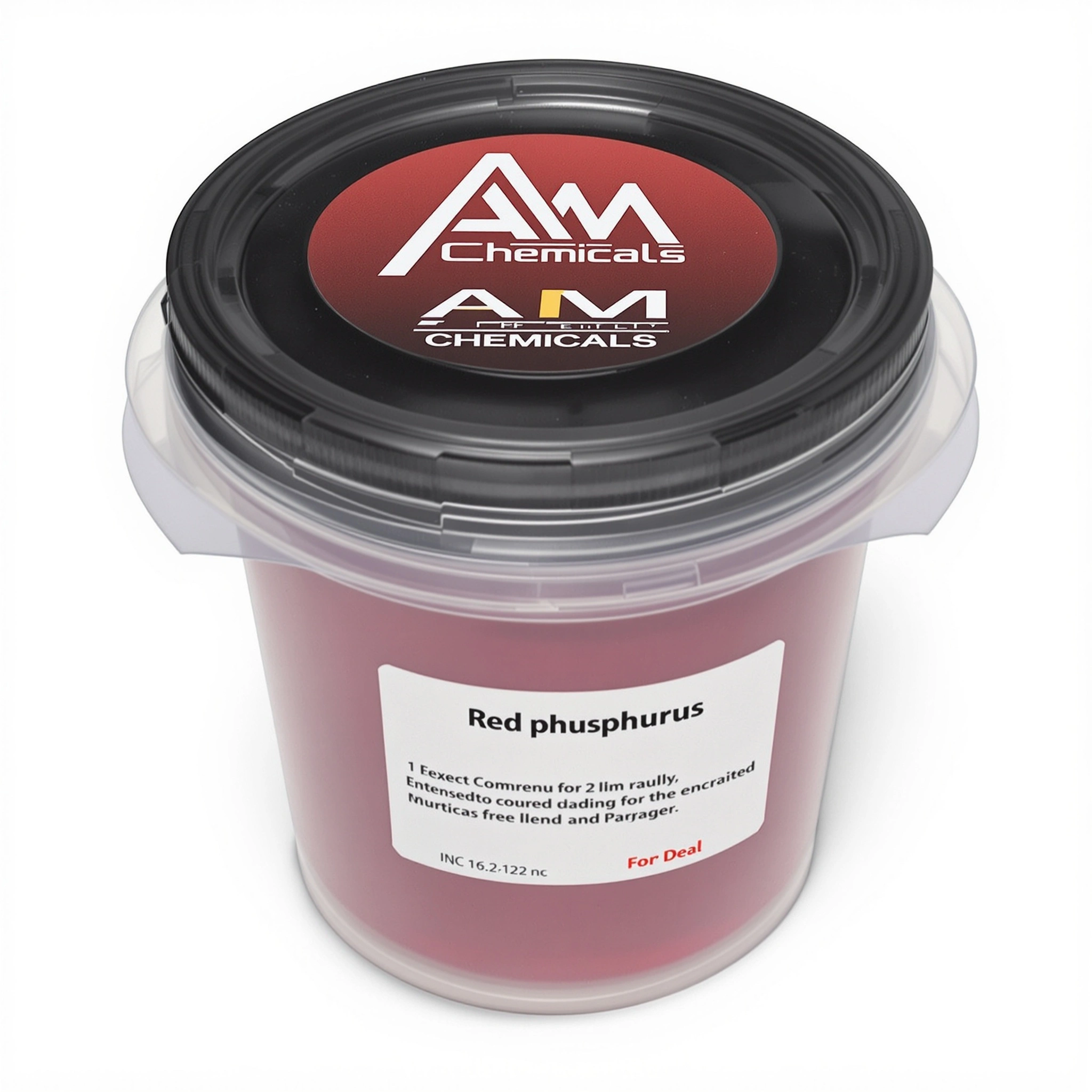
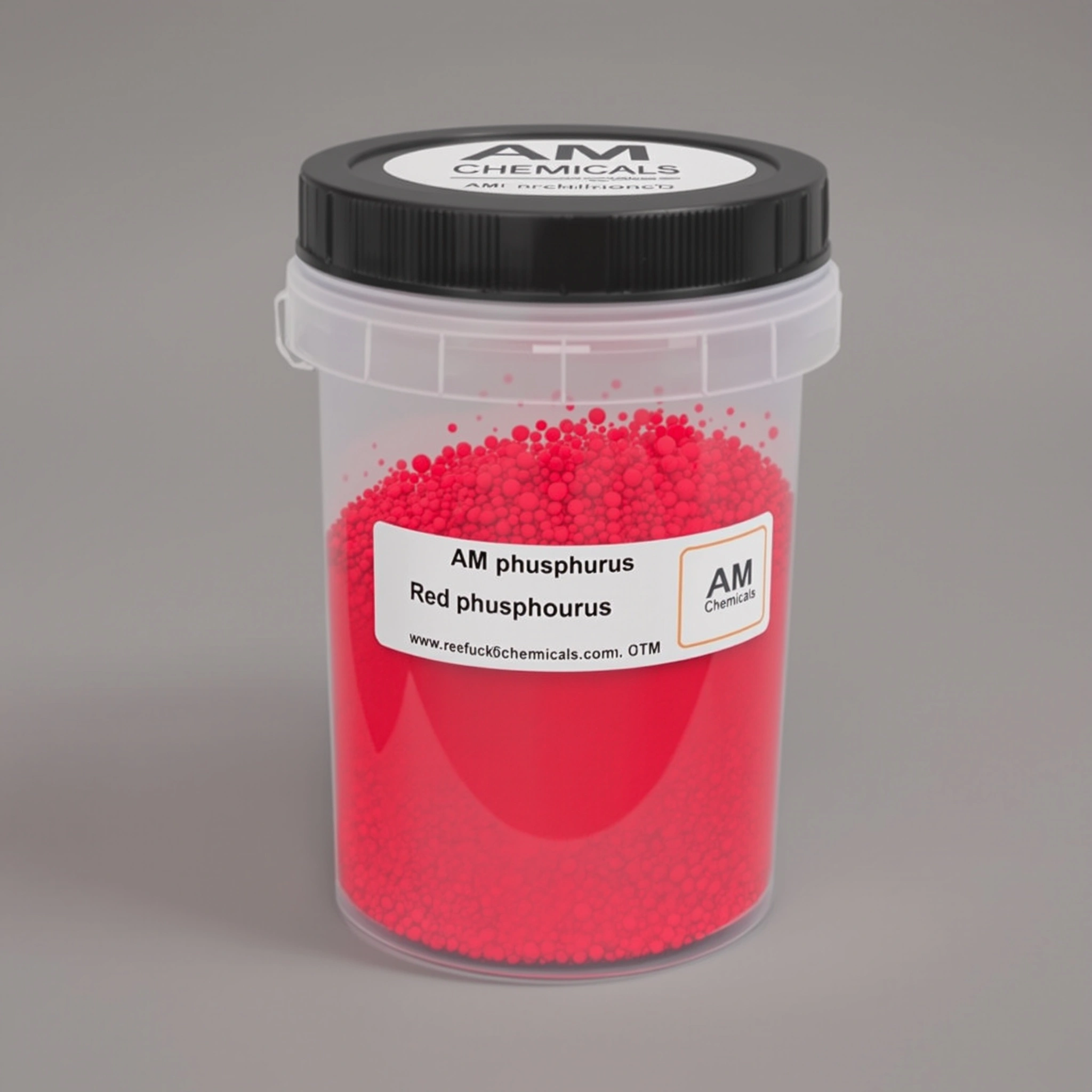
Red phosphorus is an allotrope of the element phosphorus that appears as a dark red to brown powder or amorphous solid. Compared with white (yellow) phosphorus it is much more stable and less volatile, but it remains a reactive material with fire and health hazards if not managed correctly.
-
Name: Red phosphorus
-
Formula: P (elemental phosphorus, red allotrope)
-
CAS Number: 7723-14-0
-
Appearance: Dark red to brown amorphous powder or granules
-
Solubility: Insoluble in water; soluble in certain nonpolar solvents under aggressive conditions
-
Stability: Thermodynamically more stable than white phosphorus; may ignite at high temperature or under strong friction
High-Level Industrial & Technical Applications (Informational)
Used under tightly controlled and regulated conditions, red phosphorus can be an ingredient in legitimate industrial formulations. Examples of high-level, legitimate uses (for which organizations typically require permits, safety plans and regulatory filings) include:
-
Flame-retardant formulations for certain plastics, rubbers and coatings (used as a component of additive systems).
-
Specialty chemical synthesis where phosphorus chemistry is required, performed in closed systems by qualified chemists.
-
Industrial formulations and stabilizers (in applications where red phosphorus is handled as part of a finished, regulated product).
Hazards & Health Effects
Red phosphorus is less hazardous than white phosphorus but still poses significant risks:
-
Fire hazard: Can ignite and burn, producing dense white smoke containing phosphorus oxides. Fine powders pose ignition and dust explosion risks.
-
Thermal hazard: Heating or friction can initiate combustion.
-
Health effects: Inhalation of combustion products (phosphorus oxides) irritates the respiratory tract and can cause systemic effects. Skin or eye contact with dust can cause irritation or burns. Chronic exposure to combustion products may affect lungs and other organs.
-
Environmental hazard: Combustion products are corrosive and may harm aquatic life if released.
Always rely on the product SDS for authoritative hazard classifications and exposure limits.
Safe Handling & Workplace Controls
Only trained personnel should manage processes that involve elemental phosphorus. Controls and practices include:
-
Substitution: Evaluate safer, non-phosphorus alternatives before selecting red phosphorus.
-
Engineering controls: Use closed systems, inert-gas blanketing where appropriate, local exhaust ventilation and dust control to prevent airborne particulate.
-
Personal protective equipment (PPE): Chemical-resistant gloves, eye protection, face shields and protective clothing. Use respiratory protection when dust or combustion products may be present.
-
Housekeeping: Minimize dust generation; avoid friction/impact and static build-up. Use grounded equipment and anti-static measures.
-
Emergency procedures: Maintain fire suppression means suitable for phosphorus fires, emergency eyewash/ shower stations, and well-rehearsed spill/evacuation plans. Do not use water on burning phosphorus without expert guidance — combustion products may react; follow SDS guidance and local emergency plans.
Storage Recommendations (High-level)
-
Store in cool, dry, well-ventilated secure areas separated from oxidizers, halogens, acids and strong bases.
-
Keep in tightly sealed, labeled containers compatible with the material and the local regulatory guidance.
-
Limit inventory to the minimum necessary and maintain strict access control.
-
Protect from heat, friction and sources of ignition; avoid storage where mechanical impact or abrasion can occur.
Waste Management & Disposal
-
Treat red phosphorus and contaminated materials as hazardous waste under local environmental regulations.
-
Do not dispose of red phosphorus to drains or open environment.
-
Waste treatment should be performed by licensed waste contractors or in-plant neutralization systems supervised by trained professionals.
-
Maintain full documentation for chain-of-custody and disposal manifest where required.
Regulatory & Compliance Considerations
-
Bulk Red phosphorus is subject to hazardous materials, chemical-control and precursor regulations in many jurisdictions. It may also be controlled due to its potential misuse.
-
Typical compliance documentation and regulatory frameworks to consult: SDS, national hazardous substance lists, REACH (EU), TSCA (USA) where applicable, local environmental protection laws, and export control/chemical precursor rules.
-
Facilities working with red phosphorus should maintain permits, training records, risk assessments (HAZOP, FMEA), and emergency response coordination with local authorities.
Quality Documentation & Laboratory Testing (Informational)
For legitimate laboratory or industrial evaluation, organizations typically request:
-
Material Safety Data Sheet (SDS) / Safety Data Sheet
-
Certificate of Analysis (COA) for technical specifications (purity, particle size etc.) — when applicable in controlled R&D contexts
-
Technical Data Sheet (TDS) outlining recommended handling and technical parameters
-
Laboratory testing should be performed by accredited labs using validated analytical methods
Environmental, Health & Safety (EHS) Best Practices
-
Prioritize process safety management and a hierarchy of controls (elimination → substitution → engineering → administrative → PPE).
-
Maintain regular EHS audits, monitoring for airborne particulates and combustion byproducts, and medical surveillance where occupational exposures exist.
-
Implement community and worker-protection measures, including notification and coordination with local emergency responders.
Reviews
There are no reviews yet.